
The Analog Executive: Why CEOs Are Ditching Smart Tech
The new status symbol isn't the latest gadget. It's the luxury of being offline.

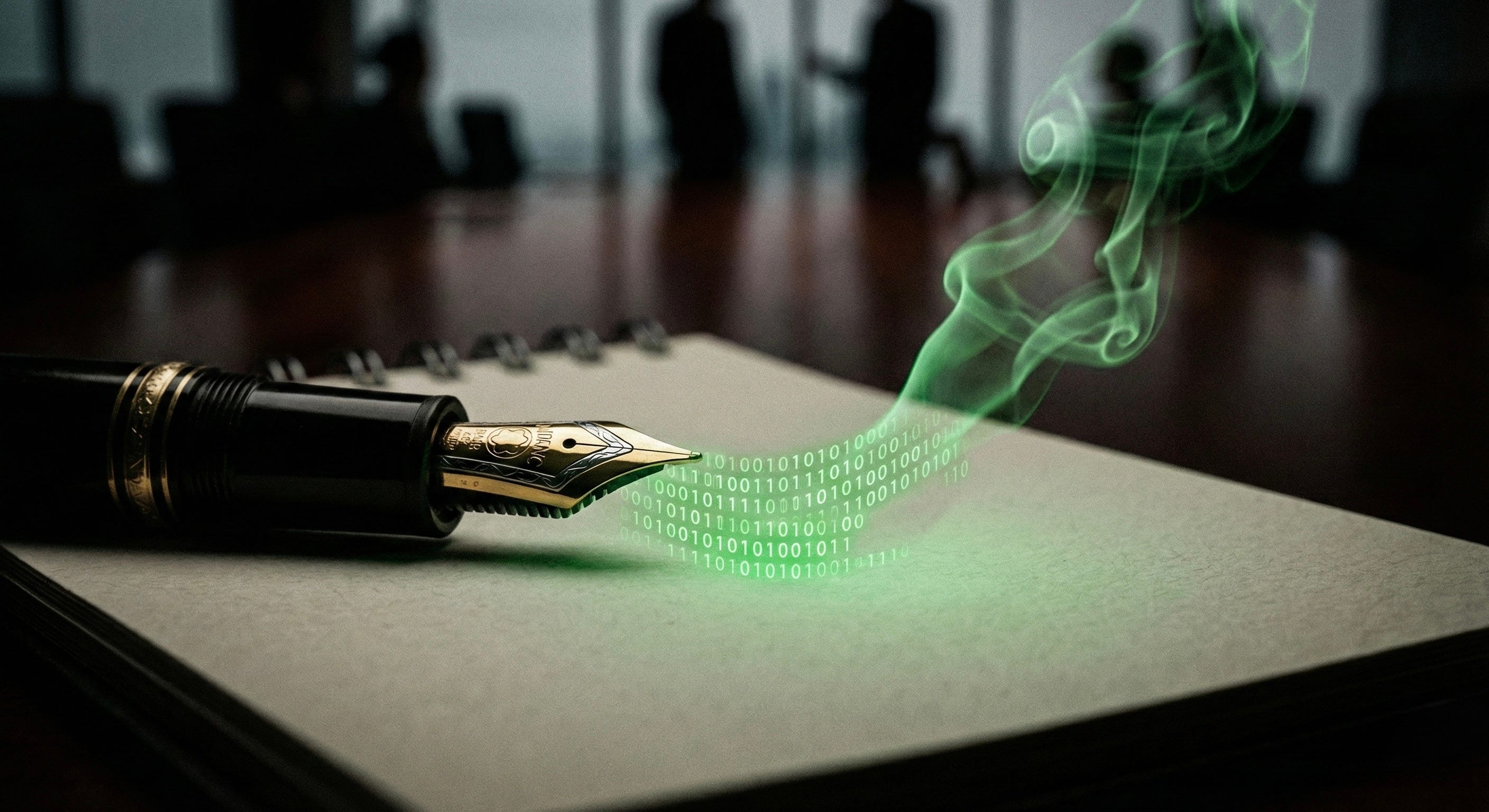
The most powerful person in the room is not wearing the Apple Vision Pro 4.
I witnessed this tableau a few months back at a tech summit in San Francisco. Around the table, the junior developers and product managers were strapped in. They were wearing $3,500 headsets, gesturing at floating windows, their eyes tracking invisible notifications. They looked like cybernetic pilots, fully integrated into the machine.
And at the head of the table sat the CEO.
He had no headset. No smart watch. No tablet.
On the table in front of him sat two things: A dedicated “dumb” phone (a Light Phone II) and a black paper notebook with a fountain pen.
Ten years ago, technology was the ultimate status symbol. The CEO had the newest iPhone before it launched. The CEO had the first iPad. Tech meant access. Tech meant power.
In 2026, the script has flipped.
Connection is now a burden. Disconnection is the ultimate luxury.
The New Digital Divide
We used to worry about the “Digital Divide” meaning that poor people wouldn’t have access to the internet. We got that wrong. The new divide is that the poor are forced to be online, while the rich can afford to be offline.
Look at the hierarchy of your own office.
The entry-level worker is tracked. Their Slack status is monitored. Their keystrokes are logged by “productivity optimization” AI. They are required to be “green” (available) from 9 to 5. They are data-rich and privacy-poor.
The executive, however, is invisible.
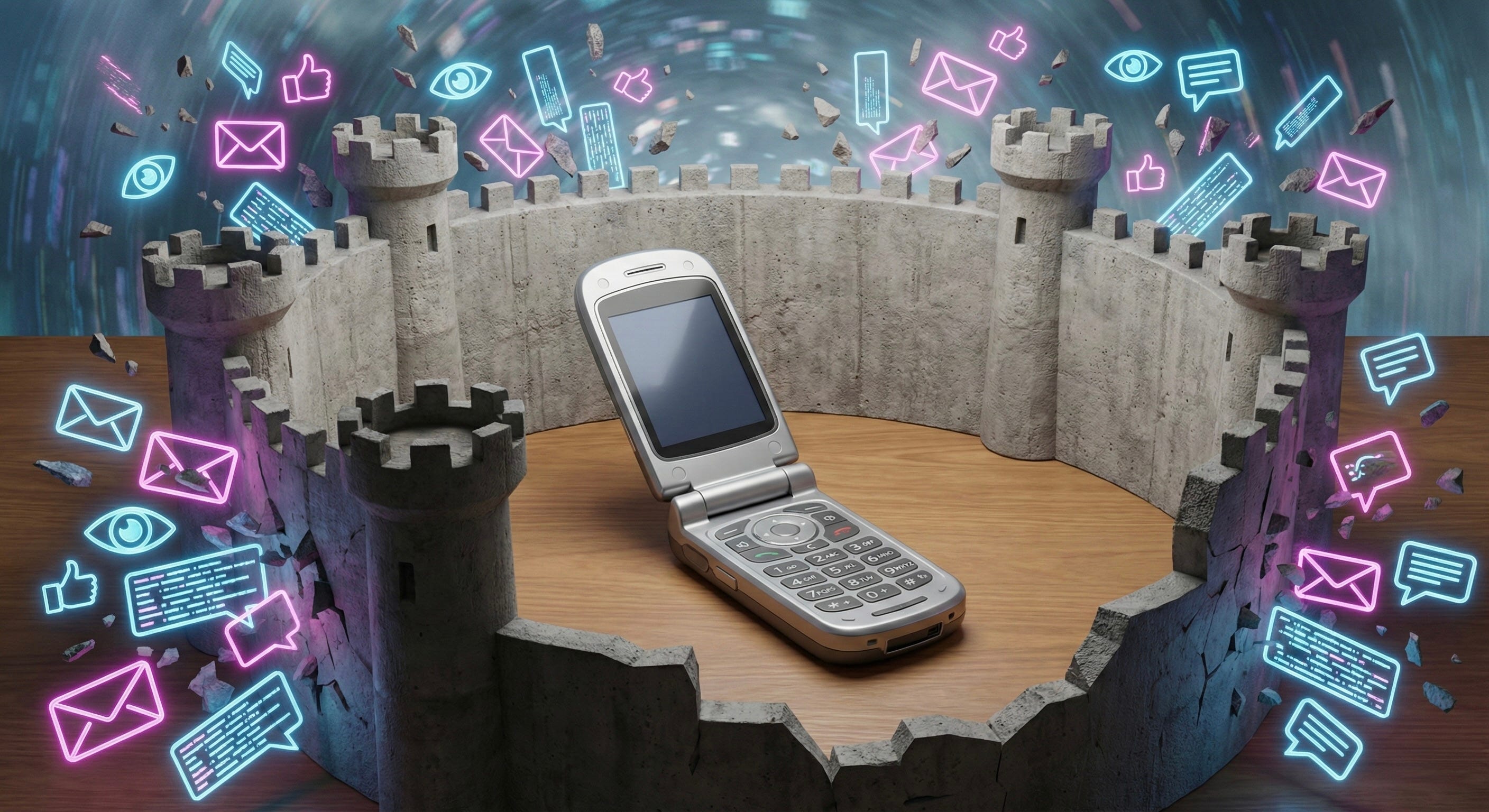
That flip phone on the table isn’t an affectation. It is a security protocol. It doesn’t track GPS location for advertisers. It doesn’t listen for wake words. It doesn’t have an app ecosystem leaking metadata to third-party brokers.
The paper notebook cannot be hacked. It cannot be subpoenaed as easily as a cloud server. It cannot be wiped remotely.
The CEO knows this because their company sells the tracking software everyone else is using. They are the drug dealer who refuses to get high on their own supply.
Think about that for a moment.
Privacy as a Luxury Asset
I call this the “Privacy Premium.”
If you use a free service (Gmail, Meta, TikTok), you pay with your data. You are the product. If you are wealthy, you pay with cash to opt out.
You see it in the C-Suite’s lifestyle choices. They don’t have smart speakers. Meanwhile, I admit I’m the sucker here; I have an Alexa enabled device in every room. I even travel with an Echo Dot just so I can get a weather report or set an alarm without using my phone. I willingly trade a portion of my privacy for convenience.
But for others? They don’t make that trade. They send their children to Waldorf schools where screens are banned until high school. They go on “digital detox” retreats that cost $2,000 a night just to have someone lock their phone in a safe.
In 1995, having a pager was a status symbol because it meant you were important enough to be reached. In 2026, not having a smartphone is a status symbol because it means you are important enough to be unreachable.
I love watching these cultural inversions happen in real time. It is a living proof of the Law of Accelerating Returns; history is compressing, and the rules of the game are flipping faster than we can learn them.
The Cognitive Defense
There is another reason for the fountain pen, beyond security. It is cognitive defense.
We know now that the human brain cannot multitask. It rapid-switches. Every notification, every haptic buzz, every red dot incurs a “switching cost.” It fractures attention.
The Junior Dev in the Vision Pro is processing four streams of information simultaneously. They feel productive, but their deep-thinking capability is being shredded. They are reacting, not creating.
The CEO with the paper notebook is doing something rare. They are thinking in a straight line.
By using “dumb” tech, they are building a fortress around their attention span. This isn’t just about productivity; it is about longevity. Neuroscientific research suggests that chronic multitasking reduces gray matter density in the anterior cingulate cortex (the brain’s control center), while sustained, deep focus helps build “Cognitive Reserve”… a critical factor in staving off age-related cognitive decline and dementia.
They are outsourcing the distraction to their assistants and keeping the clarity for themselves.
The Irony of the Architects
This leads us to the sharpest irony of the modern age.
The people building the Metaverse... the engineers of the attention economy... are the ones most aggressively opting out of it.
Bill Gates restricted his kids’ screen time. Steve Jobs didn’t let his kids use the iPad. Today’s AI titans are buying ranches in Montana and using landlines.
They know what the algorithm does. They know it is designed to capture and hold human attention like a fly in amber. And because they built the trap, they know exactly where not to step.
So, the next time you walk into a high-stakes meeting, look around. Don’t look for the person with the most augmented reality gear. Don’t look for the person with the glowing wrist computer.
Look for the person with the pen. That’s probably who is really in charge.
Resources
The Light Phone - Example of the “dumb phone” movement focusing on utility without distraction.
Multitasking and Gray Matter Density (PLOS One) - Study showing higher media multitasking is associated with smaller gray matter density in the anterior cingulate cortex.
Cognitive Reserve and Dementia (National Institute on Aging) - Evidence linking cognitively stimulating activities (sustained focus) to delayed onset of dementia symptoms.
Silicon Valley Parents Are Raising Their Kids Tech-Free - Classic NYT report on how tech executives shield their own families from their products.