
The Local Logbook: Evidence That Doesn't Need Permission
Local-first becomes real when the logs are yours.

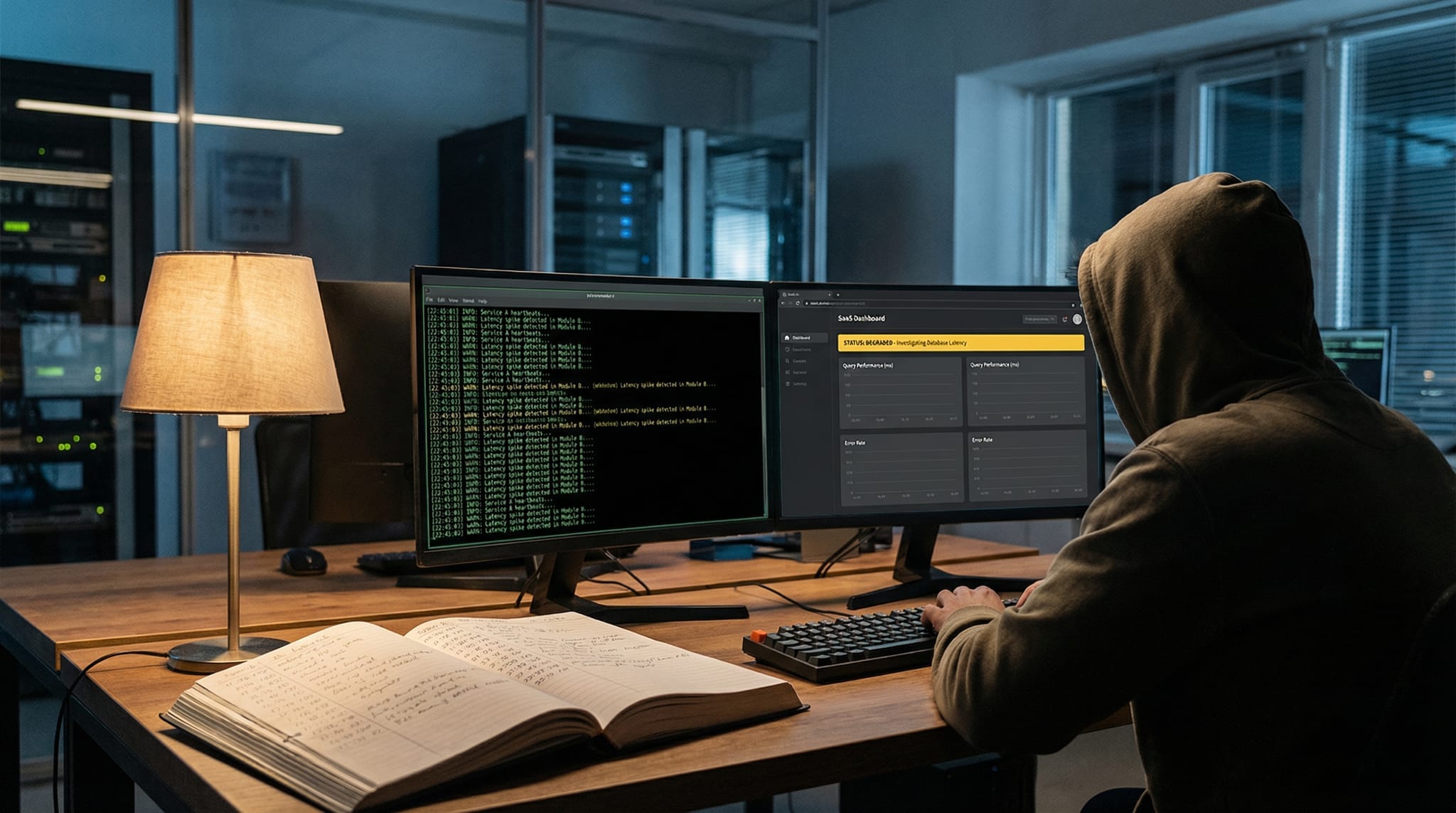
You’re in the incident review. Someone asks what exactly happened between 2:31 and 2:54 PM.
You have the alert. You have the ticket. You don’t have the log.
Not because your system wasn’t logging. It was. The logs live in the same SaaS observability platform that degraded during the incident. Their status page showed yellow for twenty-three minutes. Yellow means they’re not down, just unreliable. Your access to the log query interface was intermittent during exactly the window you need to reconstruct.
The evidence exists. You just can’t read it. The incident review ends with “we’ll follow up once the vendor restores full access.” Nobody writes that part in the postmortem.
That’s the version of the problem that never shows up in reliability discussions. Not data loss, not a breach. The logs are there. They’re just not yours to read.
WHY YOUR LOGS AREN’T YOURS
The Local-First Is Reliability Engineering piece made the case that the authoritative copy of your data should live on your device. The cloud is a sync target, not the source of truth. That argument applied mostly to documents and working files. Logs are different. The difference matters.
You don’t read logs during normal operations. You read them when something breaks. That’s the moment most likely to coincide with degraded cloud access: the same failure that broke your application can degrade your observability platform, throttle your queries, or time out your authentication.
The failure modes aren’t exotic.
Authentication degradation means you can’t log in. Simultaneous incident queries across tenants trigger rate limiting. A network partition between your environment and the logging provider means recent data hasn’t synced yet. A vendor-side compliance hold or abuse report means your tenant’s data is frozen while they investigate something unrelated to you.
None of these are hypothetical. All of them have happened. The one thing they share: your logs are accessible when everything is working. They’re inaccessible when you actually need them.
WHAT THE LOCAL LOGBOOK ACTUALLY IS
A local logbook isn’t a replacement for centralized observability. Aggregation, dashboards, and alerting are easier in a central system. The logbook fills a different role: it’s the receipt you hold independently.
The pattern is simpler than it sounds.
Write locally before forwarding remotely. Not after. The local write is the source of truth. The remote write is the backup. If the remote fails, you still have the record.
Append-only. No modifications, no deletions after the fact. If something was logged incorrectly, write a correction entry. The original stays. That’s the difference between a log and a note: a log is immutable once written.
Rotate daily. Keep 30 days locally. Cold storage after that.
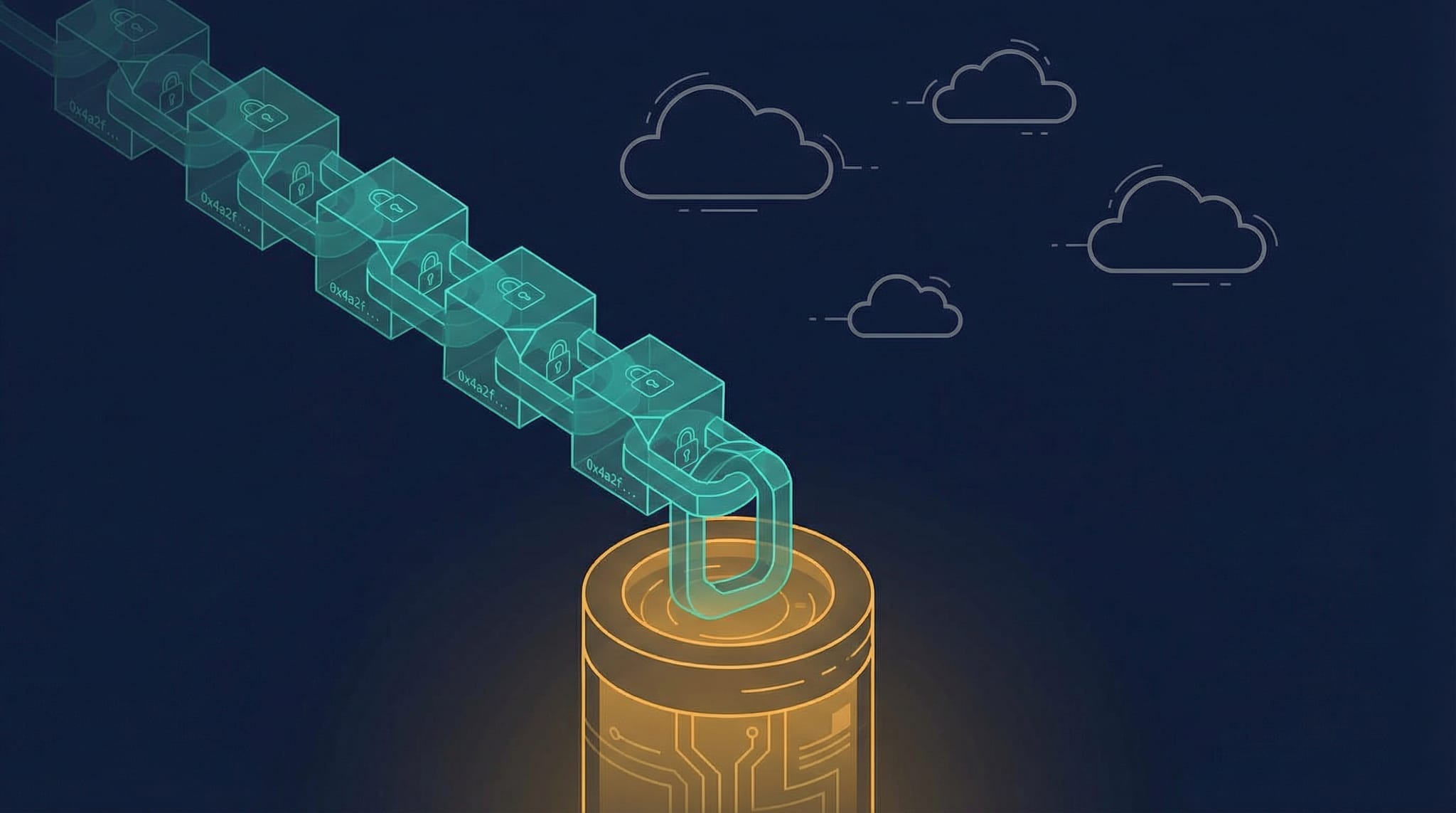
Hash each entry. Embed a SHA-256 of the previous entry into the current one. A single modified entry breaks the chain. That’s how you know if the record has been tampered with. You’re not hiding the data. You’re making it obvious when someone has changed it.
You don’t need a custom system. SQLite handles structured local logging at any scale below “multiple concurrent writers.” A plaintext append-only file with one JSON object per line works for lower-throughput cases. The format matters less than the commitment: write locally first, always.
WHAT IT PROTECTS AGAINST
The Receipts Everywhere piece established what makes a receipt worth trusting: it’s hard to modify without detection, and you can produce it on demand without asking permission. A log entry in someone else’s cloud platform fails the second condition.
There’s a third property the Receipts piece didn’t fully address: the receipt needs to exist during the window when you need it most.
Legal proceedings. Internal investigations. Post-incident reviews. Compliance audits. These are the moments when a log becomes evidence. They’re also the moments most likely to involve some kind of access restriction: the incident has degraded the platform, a party to the investigation has incentive to delay your access, or the vendor’s support queue is 48 hours deep.
A local logbook is independent of those conditions. You don’t need the provider’s cooperation. You don’t need uninterrupted network access. You don’t need to wait for the account unlock queue to clear.
The Privacy Is a Luxury Good piece observed that being unreachable is now a status signal. The local logbook is the operational version of that principle: the ability to produce your own record, on your own terms, is a form of independence that compounds.
THE CHECKLIST
Five questions. Binary answers.
Can you query your logs without network access? If no: you don’t control them. You have a view into someone else’s data.
During your last incident, did you have uninterrupted log access for the affected window? If no: your logging infrastructure has the same failure surface as your application. That’s not observability. That’s optimism.
If your logging vendor locked your account today, when would you lose access, and how much historical data would you lose? Write down the answer. Share it with whoever owns your incident response plan.
Are your logs append-only and immutable after the fact? If they can be modified silently, they’re not evidence. They’re notes. Notes are useful. They’re not the same thing.
Do you have a tamper-detection chain? Without one, anyone who can modify the file can edit entries and backdate them. A hash chain makes that visible. It doesn’t prevent modification; it makes modification obvious.
If you answered no to any of these, you have monitoring. You don’t have a record.
THE CLOSE
Week 9 is about the shadow automation layer: what happens when local-first workflows start to automate. Scripts, crons, the informal toolchains that grow up around reliable local systems. But automation that doesn’t write a local record doesn’t get to claim the reliability benefits. The logbook is the prerequisite, not the afterthought.
The Receipts piece ended with: “Pick the smallest receipt you can generate that you would bet your job on.” The local logbook is the operational version of that instruction. It isn’t a compliance artifact. It isn’t a surveillance system. It’s a record you can produce, on demand, without asking anyone’s permission.
If it isn’t written locally, it didn’t happen.
Resources
Local-First Software: Kleppmann, M., Wiggins, A., van Hardenberg, P., McGranaghan, M. “Local-First Software: You Own Your Data, in Spite of the Cloud.” Ink & Switch / ACM Onward! 2019. The foundational paper on local-first design. Week 7 applied its principles to reliability engineering; Week 8 extends them to logging specifically.
SQLite.org: Public domain, zero-dependency embedded database engine. Appropriate for structured local log storage at any scale below multiple concurrent writers.
OpenTelemetry Collector: [Please Verify Link: OpenTelemetry Collector local file exporter documentation]: The OTel Collector’s file exporter allows writing structured telemetry locally before forwarding to any backend. Configurable as a primary or fallback write path.
Morphic: Receipts Everywhere: Week 2 of this arc. Establishes the receipt model this piece extends into logging.
Morphic: Local-First Is Reliability Engineering: Week 7. The design principles behind local-first; the logbook is their operational implementation.